
G2 · Coming soon
Three sensing methods.
One Sentinel platform.
G2 is planned to combine Remote ID, radio-frequency spectrum sensing, and acoustic detection. It is designed to extend passive sensing beyond cooperative Remote ID broadcasts.
Retained from G1
Remote ID
FAA Remote ID broadcasts over Wi-Fi and Bluetooth.
Planned for G2
Radio frequency
RF spectrum sensing from 300 MHz to 6 GHz.
Planned for G2
Acoustic
Acoustic detection alongside the radio-based sensing methods.
G2 uses the same Sentinel software for reviewing detections, alerts, and incident reports. Discuss G2’s planned capabilities and availability during your site assessment.
Capabilities
G1 capabilities retained. G2 sensing added.
Remote ID and Sentinel are available with G1 today. G2’s planned additions extend that platform.
| Capability | G1 · Available now | G2 · Coming soon |
|---|---|---|
| FAA Remote ID over Wi-Fi and Bluetooth | Included | Retained from G1 |
| Sentinel, alerts and incident reports | Available now | Same Sentinel software |
| RF spectrum sensing, 300 MHz to 6 GHz | Not included | Planned addition |
| Acoustic detection | Not included | Planned addition |
Available now
What G1 receives.
What it cannot see.
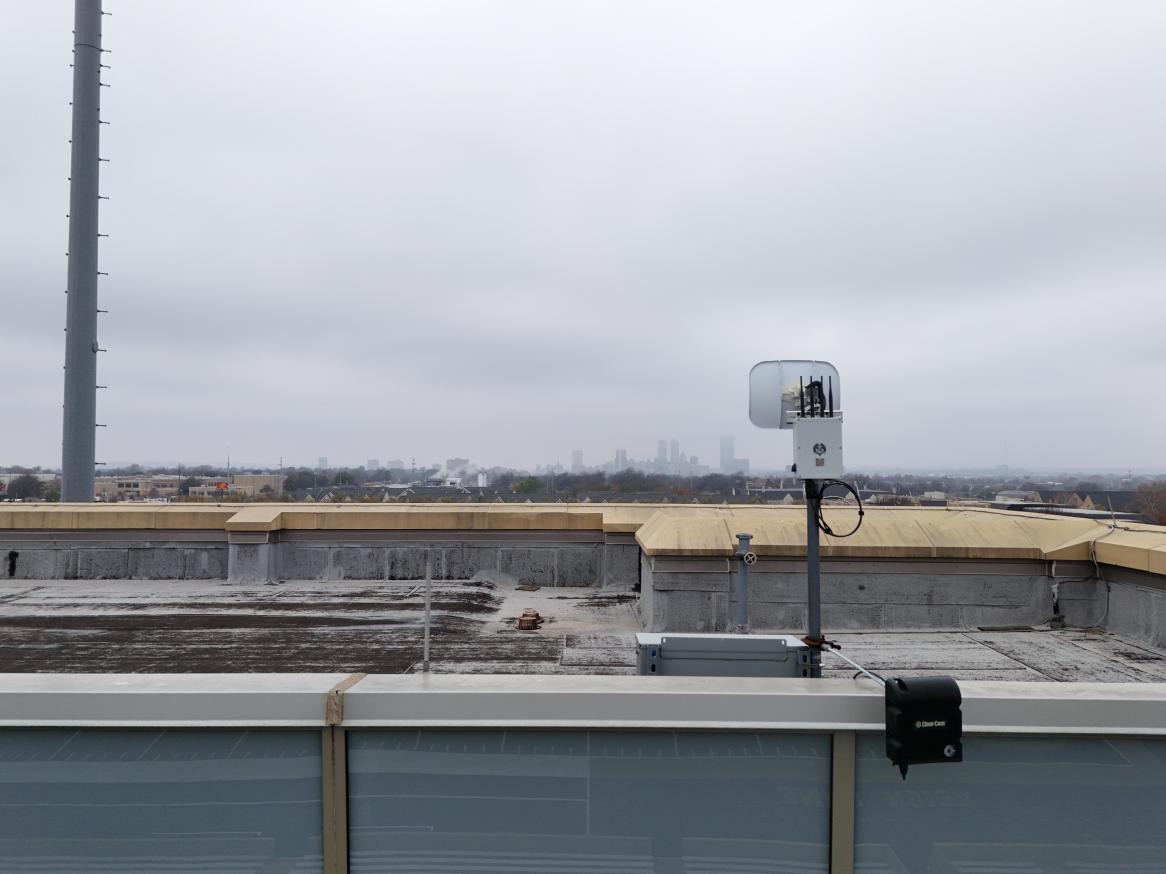
G1 is a passive, receive-only sensor for FAA Remote ID broadcasts over Wi-Fi and Bluetooth. It detects cooperative drones that are broadcasting. Drones that do not broadcast are invisible to G1.
Aircraft position comes from the broadcast. G1 does not determine what a drone is carrying, jam it, or take control of it.
Understand Remote ID detection and its limits →
For utility security teams: explore proposed FAA Part 74 and Remote ID monitoring.
Sentinel
Hardware on site.
Software for your team.
Sentinel is available with G1 today. Review recorded detections, receive alerts, and export incident reports for your security workflow.
24/7 managed monitoring is available as a service. Deeper security platform connectors are on the roadmap.
Installation
Placement and connectivity
follow your site.
The assessment reviews your footprint, mounting access, and coverage priorities before recommending sensor count and placement.
Backhaul can use cellular connectivity or the site network, depending on the facility. We confirm mounting, power requirements, and the connection plan before installation.
Site assessment
Get a sensor plan for your site.
We reply with placement, monitoring scope, and a quote. You tell us the footprint and who should be alerted.